FamTrips
Mobile · UX Research & Product
About
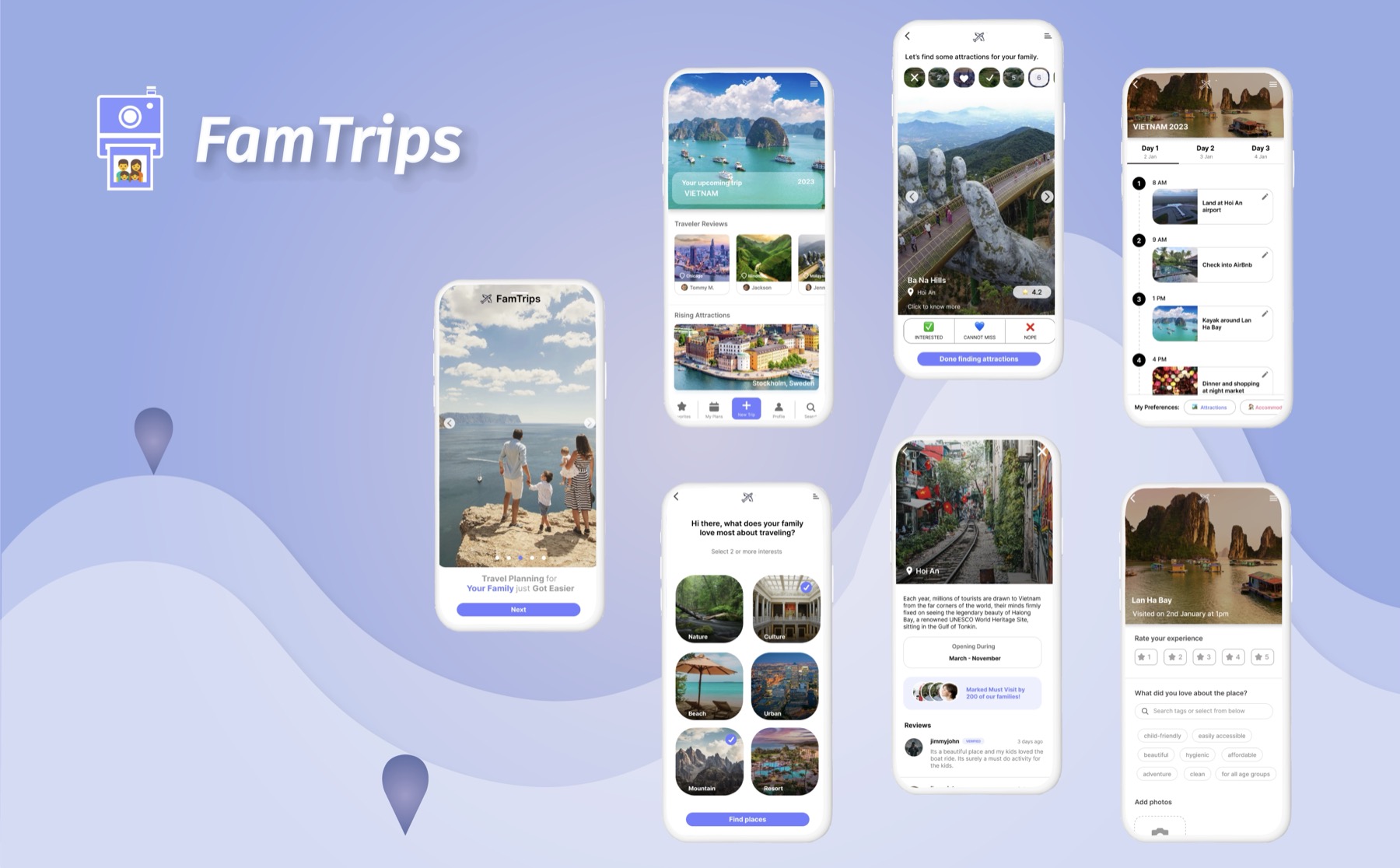
A mobile app that helps families plan trips with an AI-generated scheduler based on user preferences. As part of a four-person team, I served as both the UX researcher and Product Manager. Together, we developed a mobile app for efficient trip planning for families — our solution included an AI-generated scheduler that provided personalized recommendations based on user preferences.
Method

Problem Statement
How might we ease online travel planning for families with children?
- Exploring destinations — families need more trustworthy and diversified sources of information to explore and decide on destinations.
- Booking accommodations — families are sometimes challenged by finding accommodations online that meet their goals.
- Time coordination — deciding on a time frame that fits everyone's schedule in the family is hard.
- Itinerary management — during travels, families occasionally have trouble managing their itineraries, especially when unanticipated situations arise.
- Finding activities — exploring kid-friendly activities around the destination that fit everyone's interest is a laborious process.
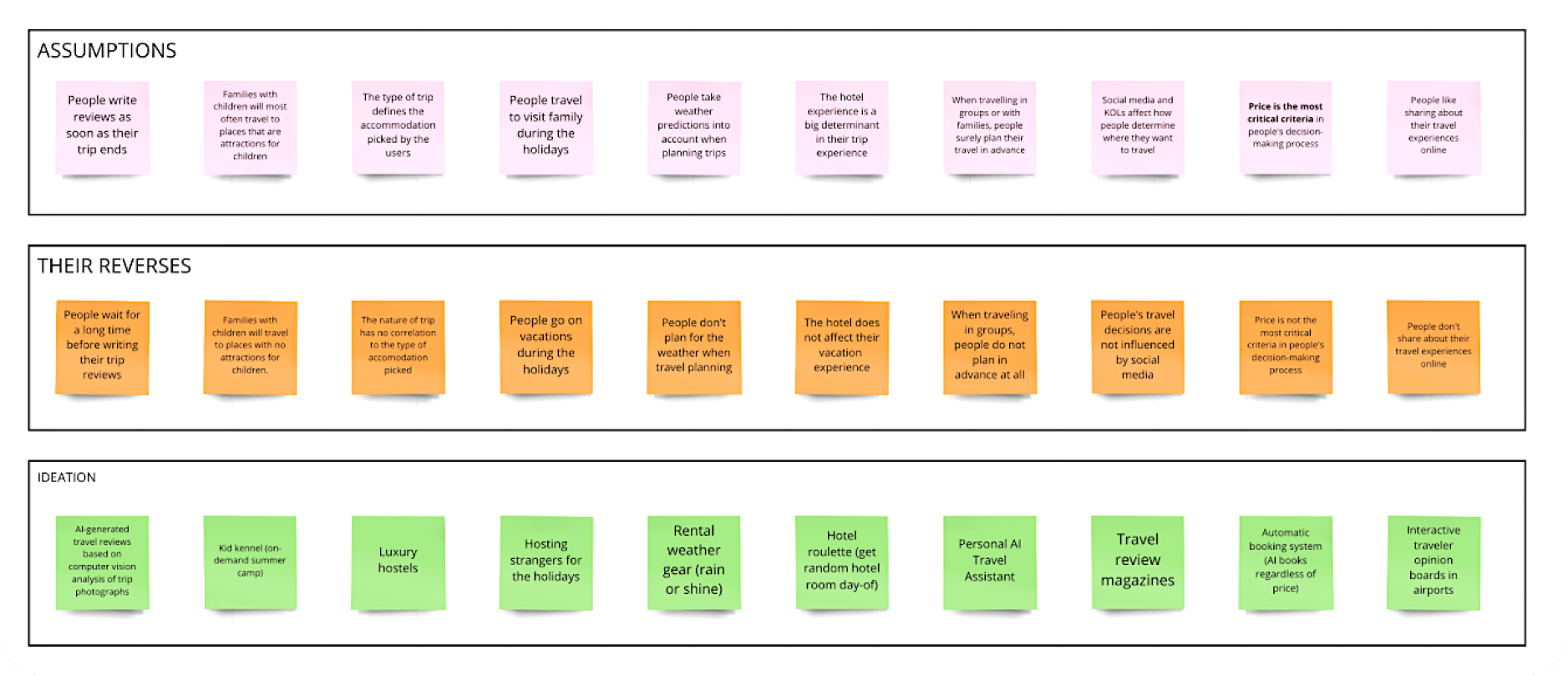
Ideation: reverse assumptions
We selected this method since it helped us break away and question our assumptions. It gave us a new perspective on our research questions and user behavior.
User Research
Semi-structured interviews
Conducted 5 user interviews, each with two contextual inquiry models: directed storytelling using photographs, and user-journey time-lining. Participants were parents of children between the ages of 3–12 who had recently gone on vacation with their families.

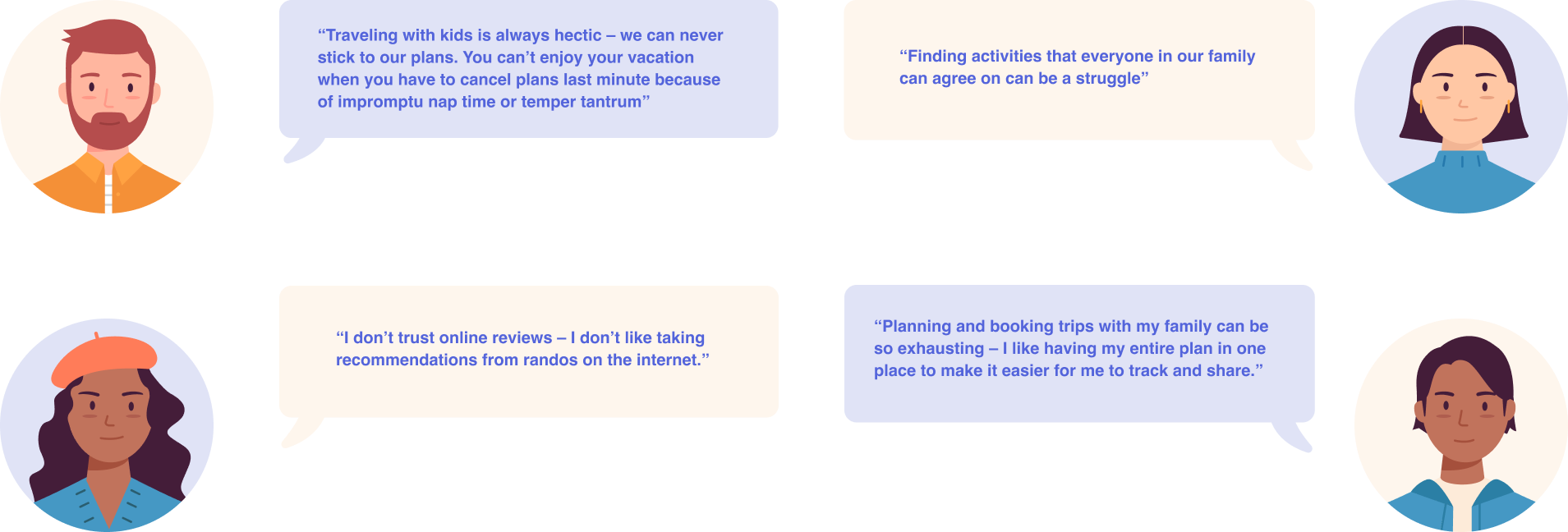
User quotes
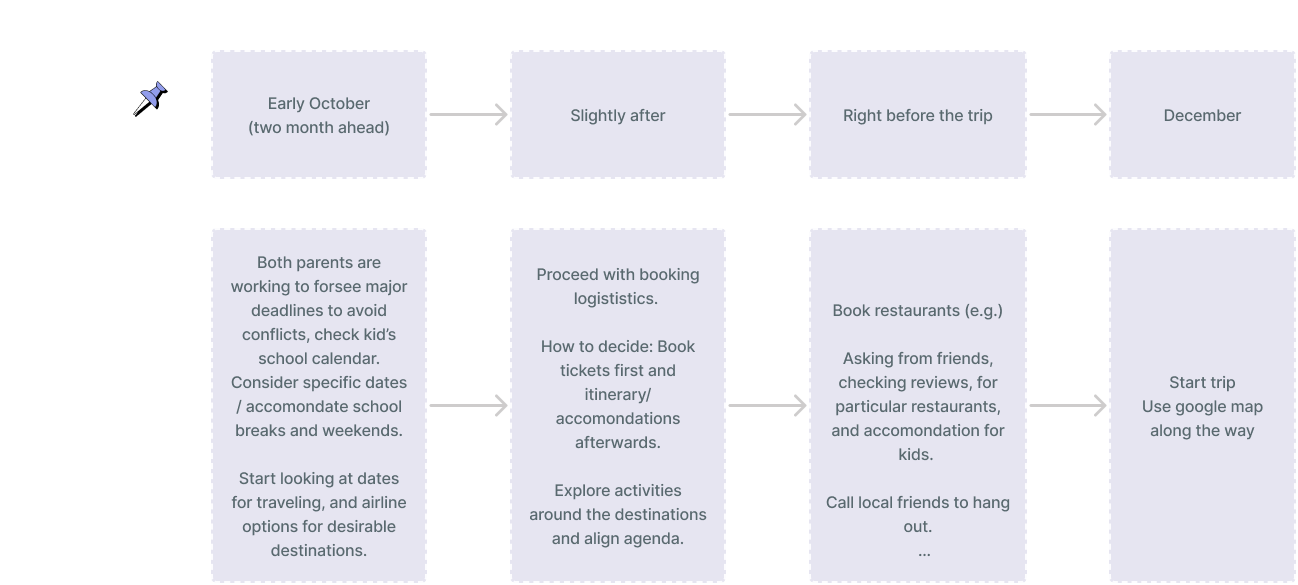
User travel plan timeline
Analysis & synthesis
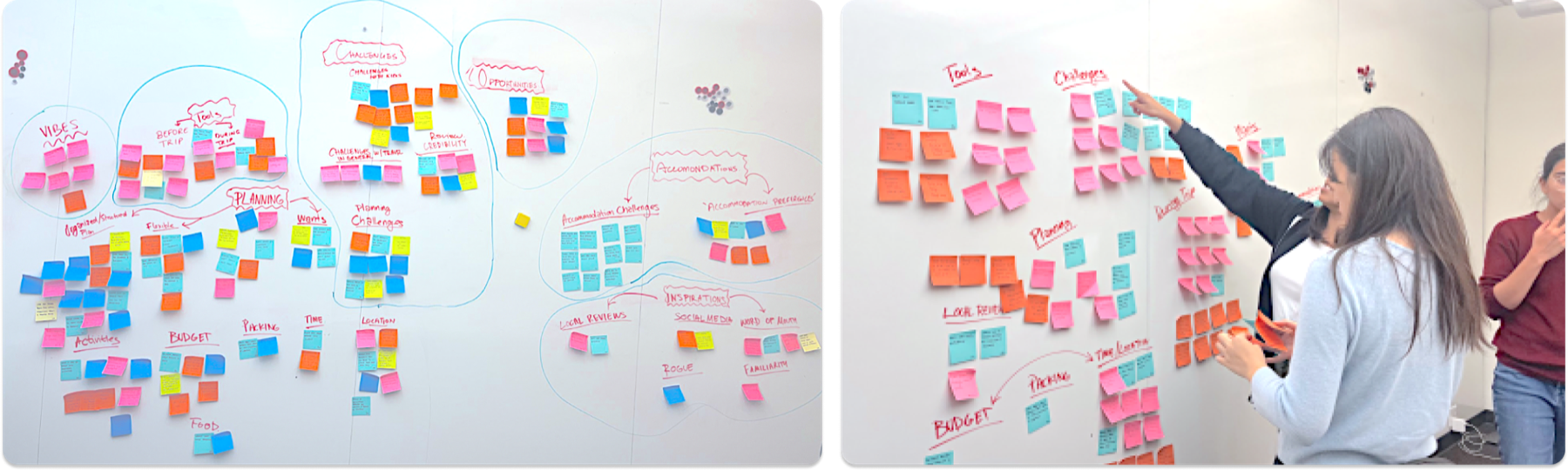
Affinity clustering
Emotional journey during the planning process
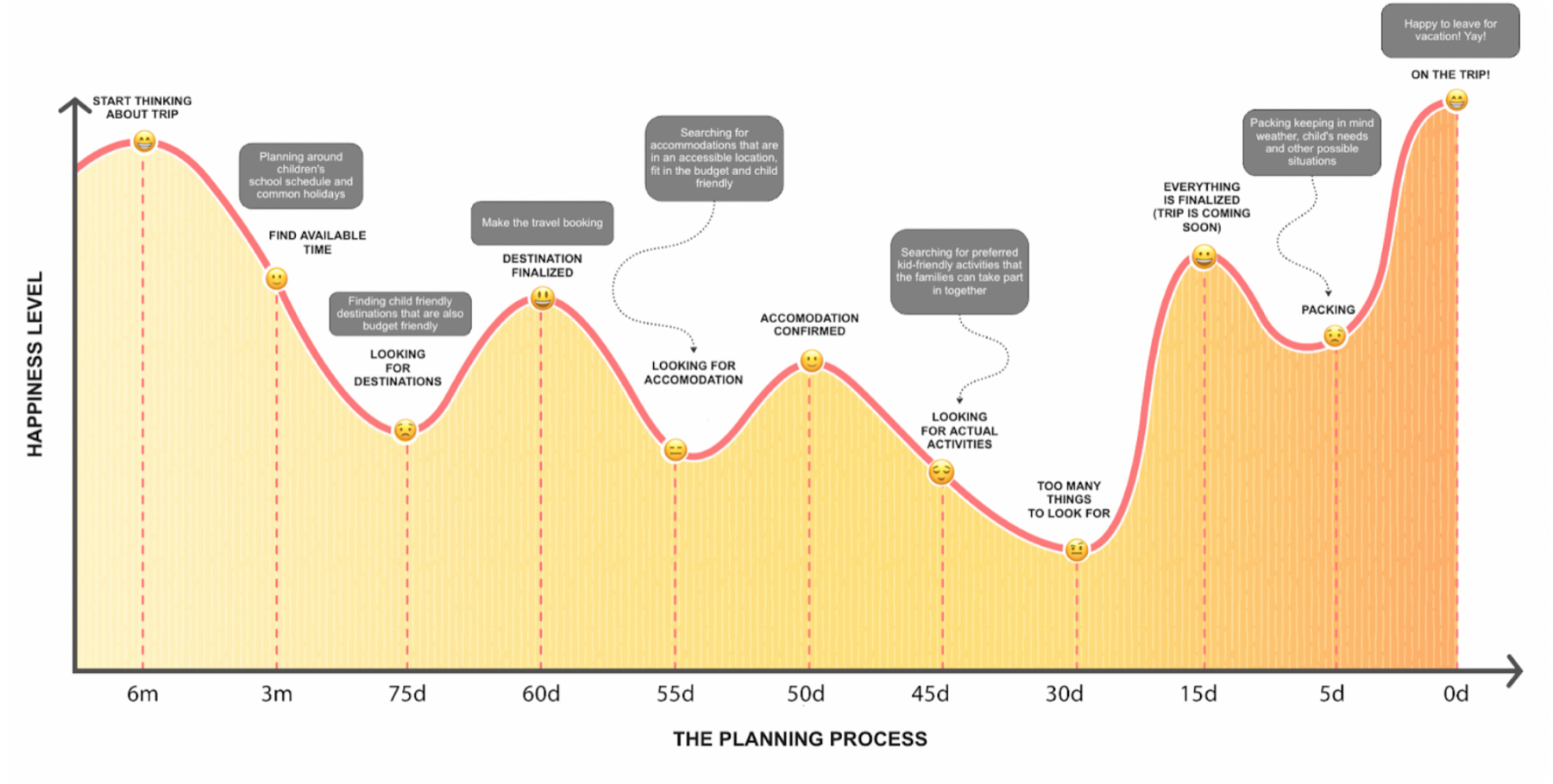
Insights & implications
- Inaccurate information on travel booking sites leads to uncomfortable experiences.
- Flexibility in the travel plan is non-negotiable when traveling with kids.
- Distributed modes of research add to the difficulty of travel planning with children.
- Finding activities that include the entire family is a time-consuming process.
- Families rely on recommendations from trusted sources to mitigate unknown risks.
Idea Generation
Crazy 8's
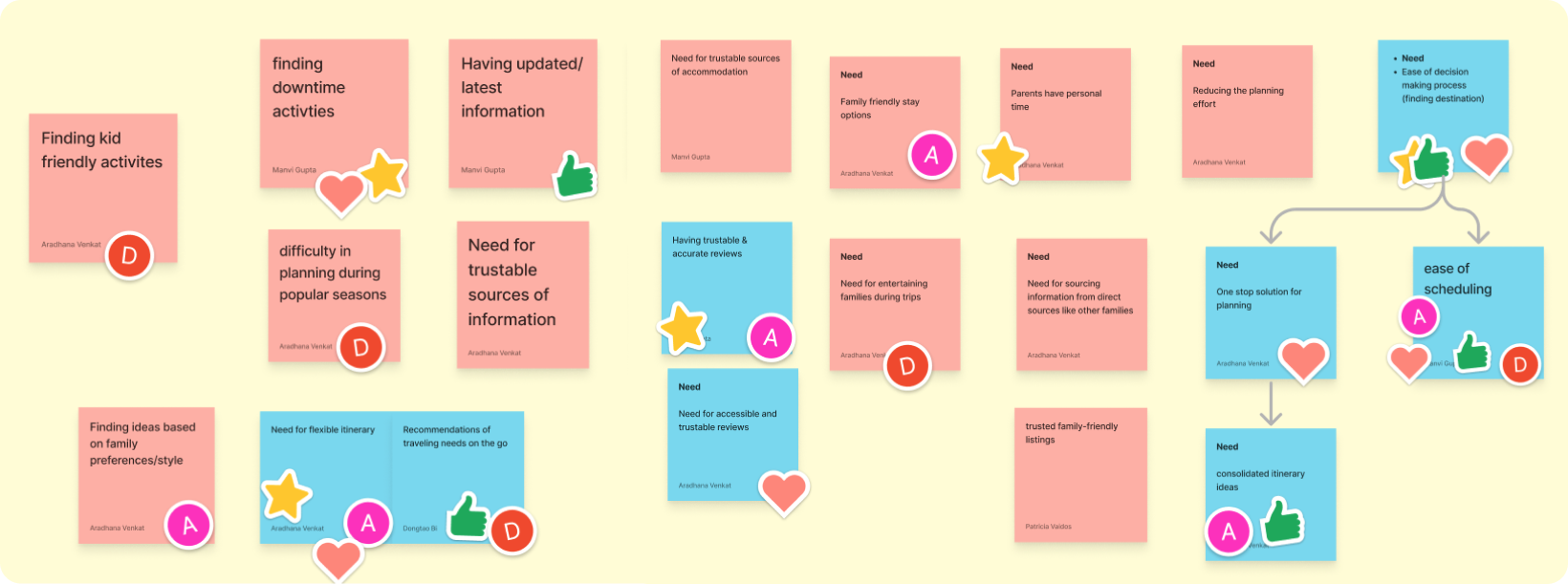
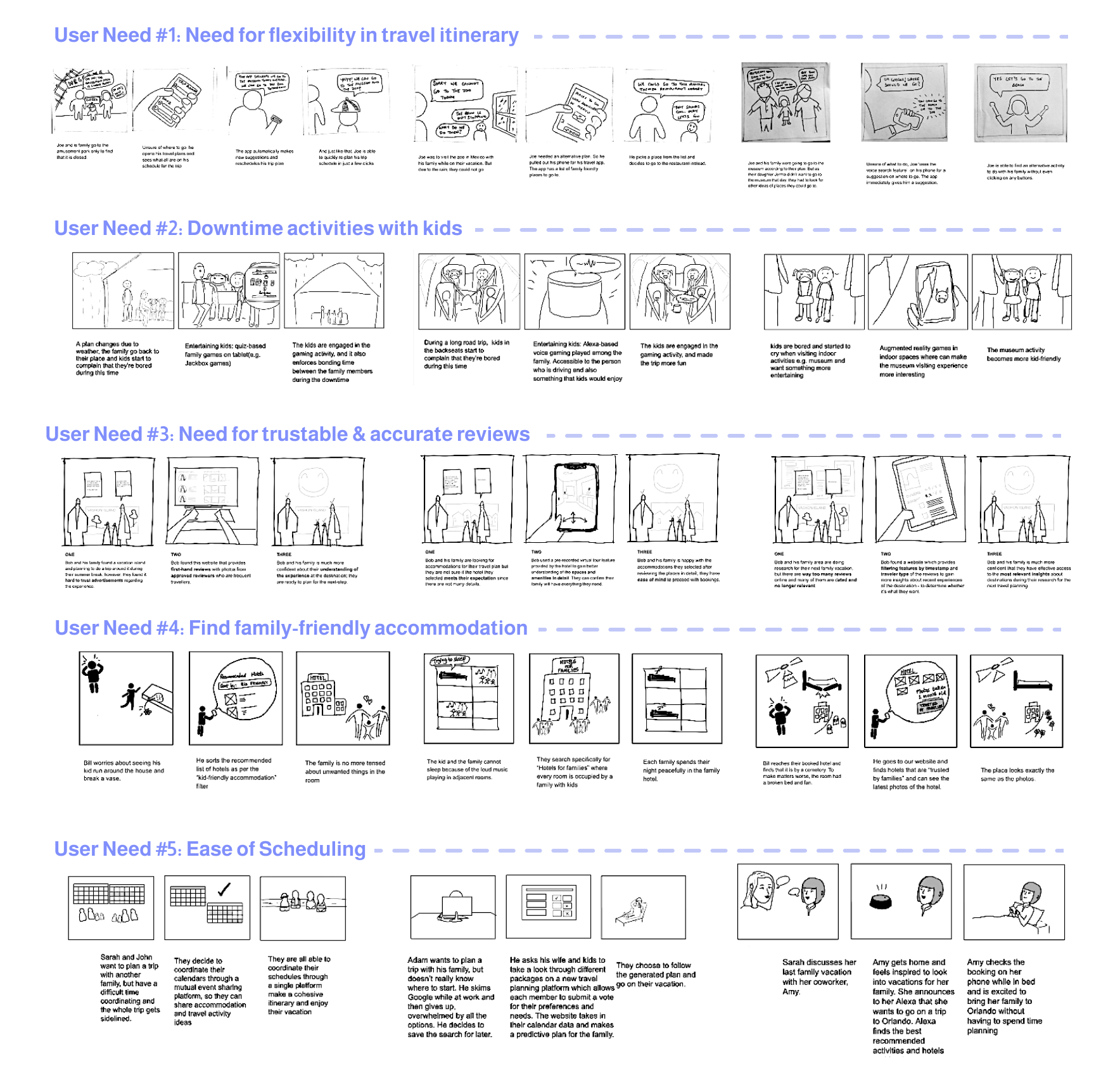
We used Crazy 8's to each generate 8 ideas based on our "why statement" and insights. We combined the needs into buckets and voted as a team to rank them and identify the top 5. We then divided the needs among us to generate ideas and storyboards.
User needs & storyboard
Opportunities
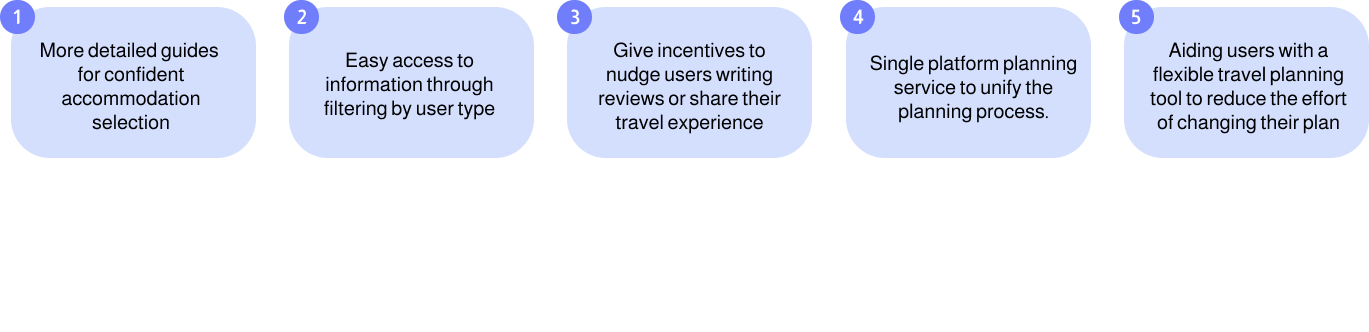
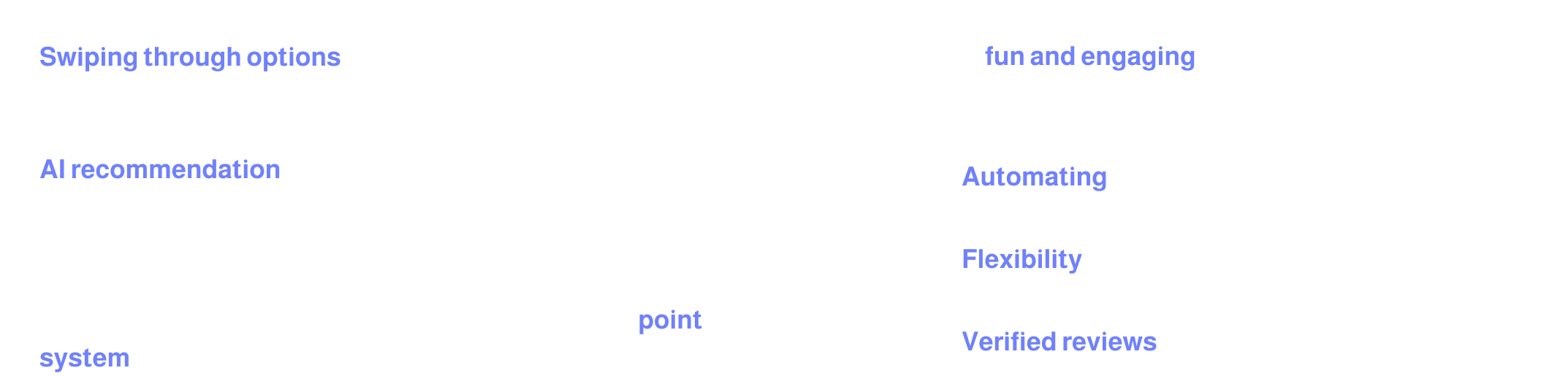
Solution
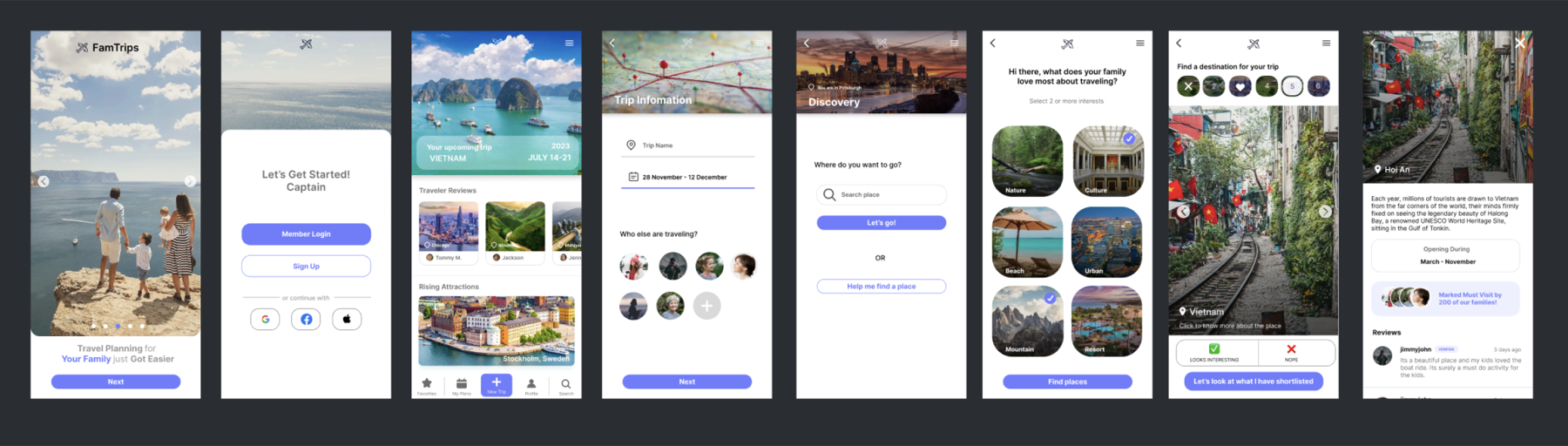
Product design
Task 1 — sign in and create a new trip
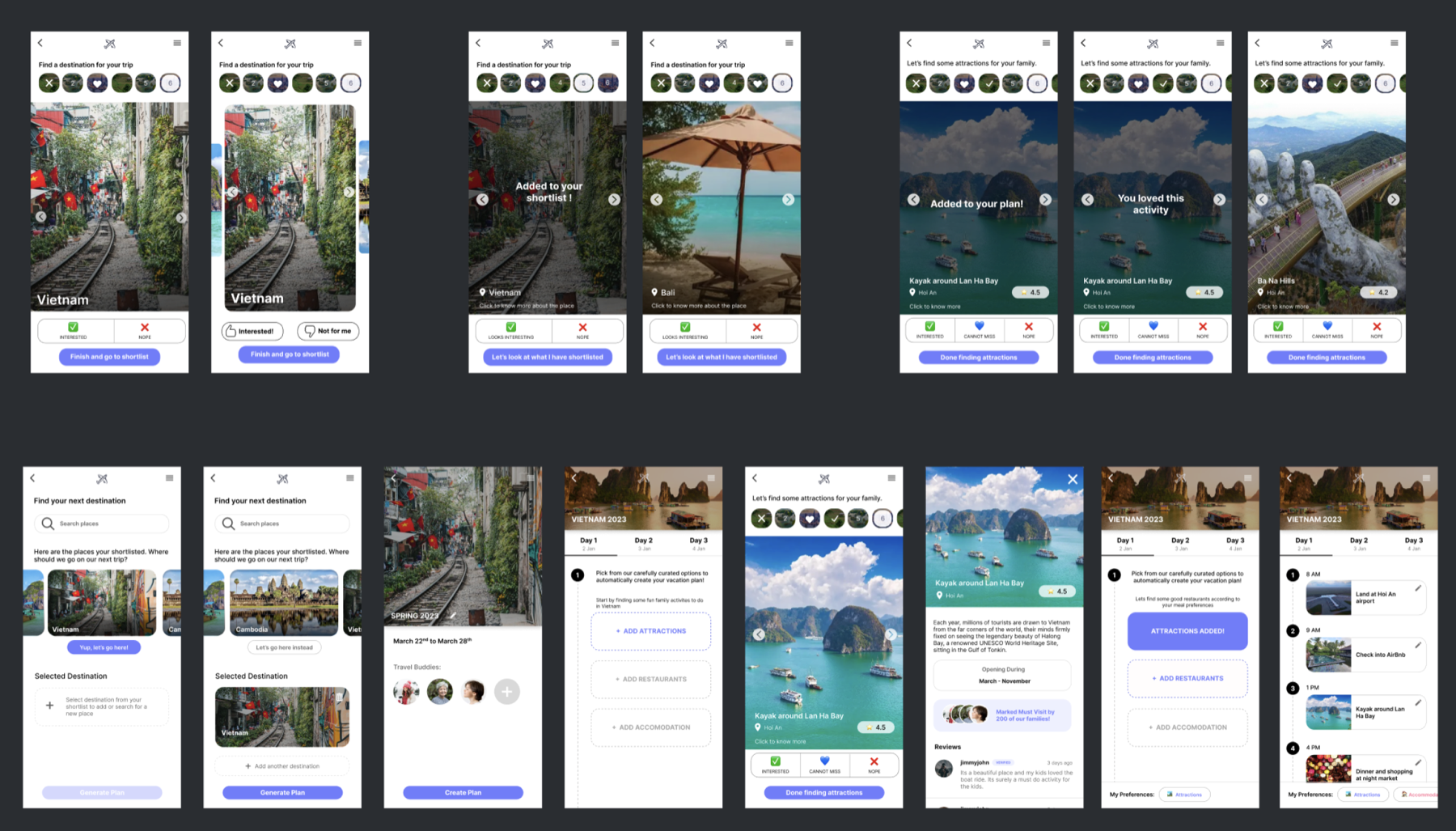
Task 2 — find a destination and auto-generate a travel plan
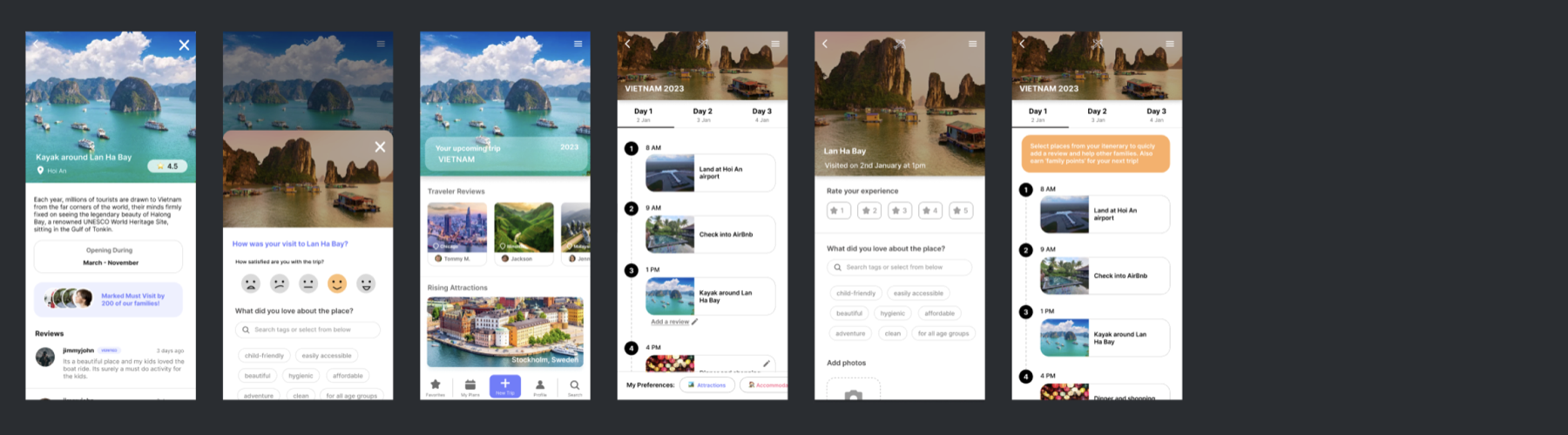
Task 3 — writing a review
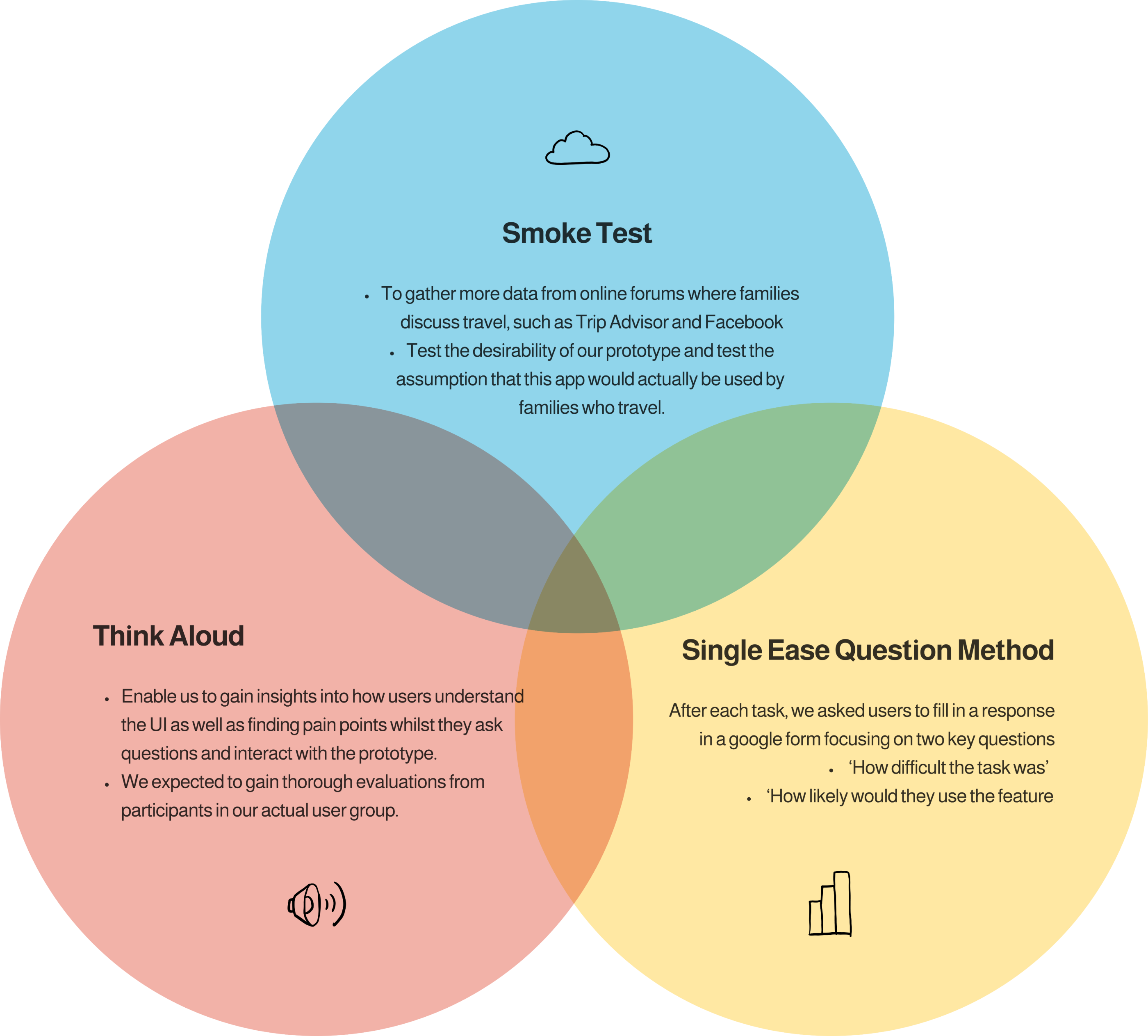
Usability Testing
Insights
- Flexibility in travel planning is crucial before and during the trip — it gives users confidence in the generated plan.
- Narrowed, personalized options save time as well as the cognitive load required while planning a trip.
- Users are not positively encouraged by prompted windows soliciting reviews, but they can otherwise be interested in sharing their experiences.
- Users responded positively to an auto-generated travel plan when also given the option to make changes.
- On-trip itinerary changes are driven primarily by unanticipated situations rather than personal travel preferences.
What's next?
We learned a lot from our usability tests. We aim to incorporate the feedback we received and reduce the issues participants faced in navigating the app — making the concept easier to understand and improving the smaller UI elements:
- The top section of the swipe page was not intuitive to most of our users.
- The review pop-up should not be so prominent every time they open the app.
- Minor changes in finalizing the destination and reviewing the generated plan across days.