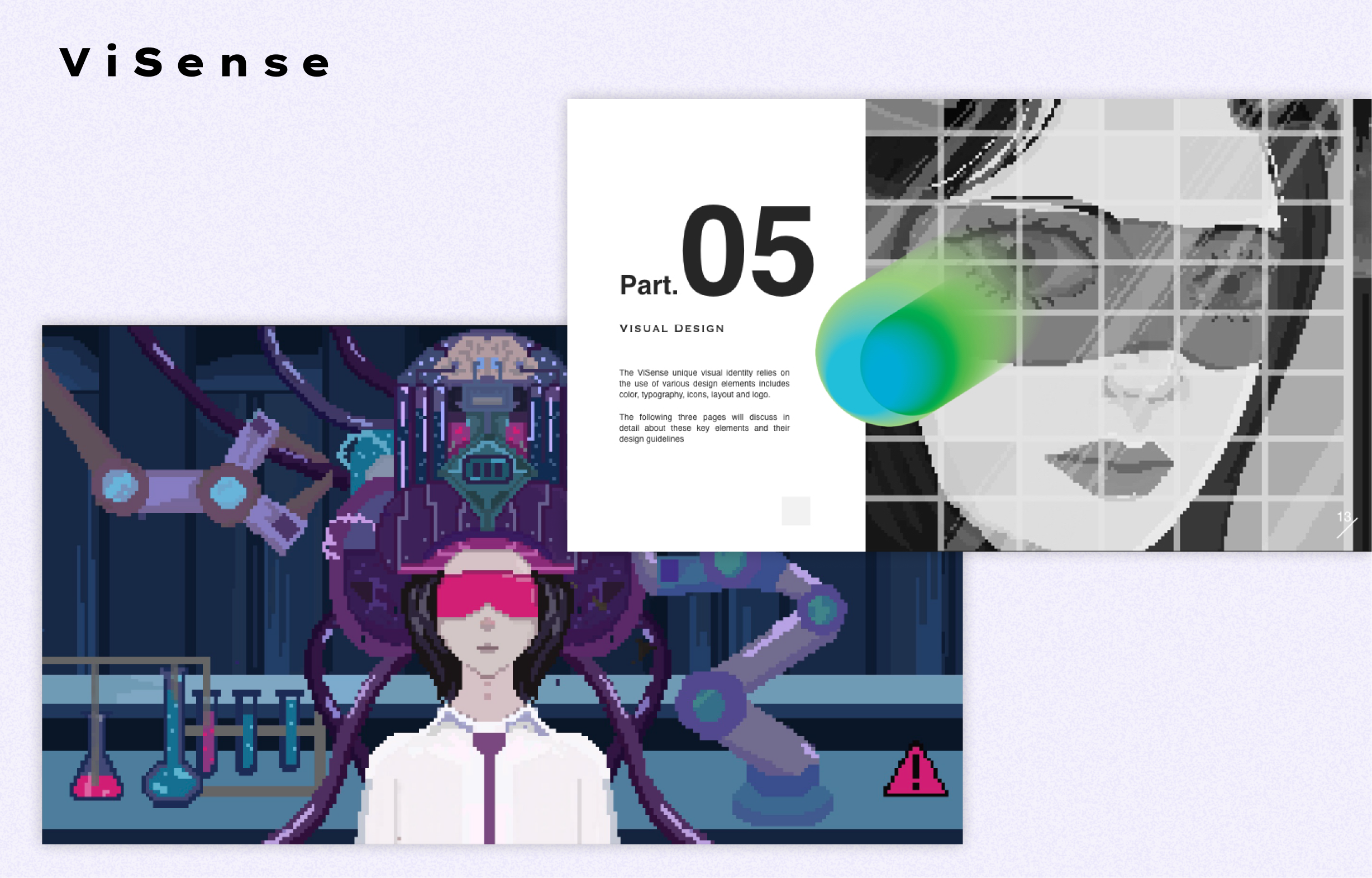
ViSense is a speculative design project: a brain-machine interactive wearable — AI glasses that read and enhance your mind — imagined for the year 2055, told through a pixel-art world. I designed the whole universe: the ideation and research, the brand identity and brandbook, a two-part animation, a 3D-printed hardware prototype, and a mock product-launch installation.
Ideation & Research
Mapping a mind-reading future
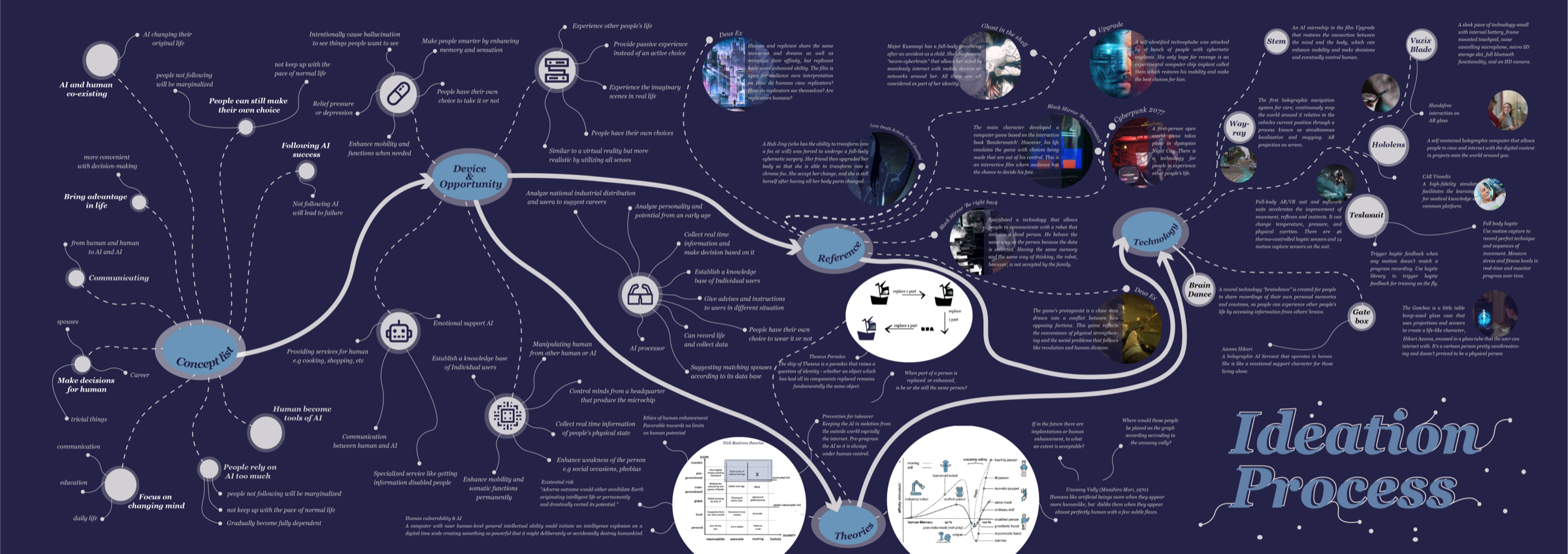
The concept grew from an extensive ideation map — devices and opportunities, sci-fi references from Deus Ex to Ghost in the Shell and Cyberpunk 2077, real technologies like Hololens, Teslasuit and BrainDance, and theories from the Theseus paradox to the uncanny valley.
The ideation map — concepts, references, technologies, theories.
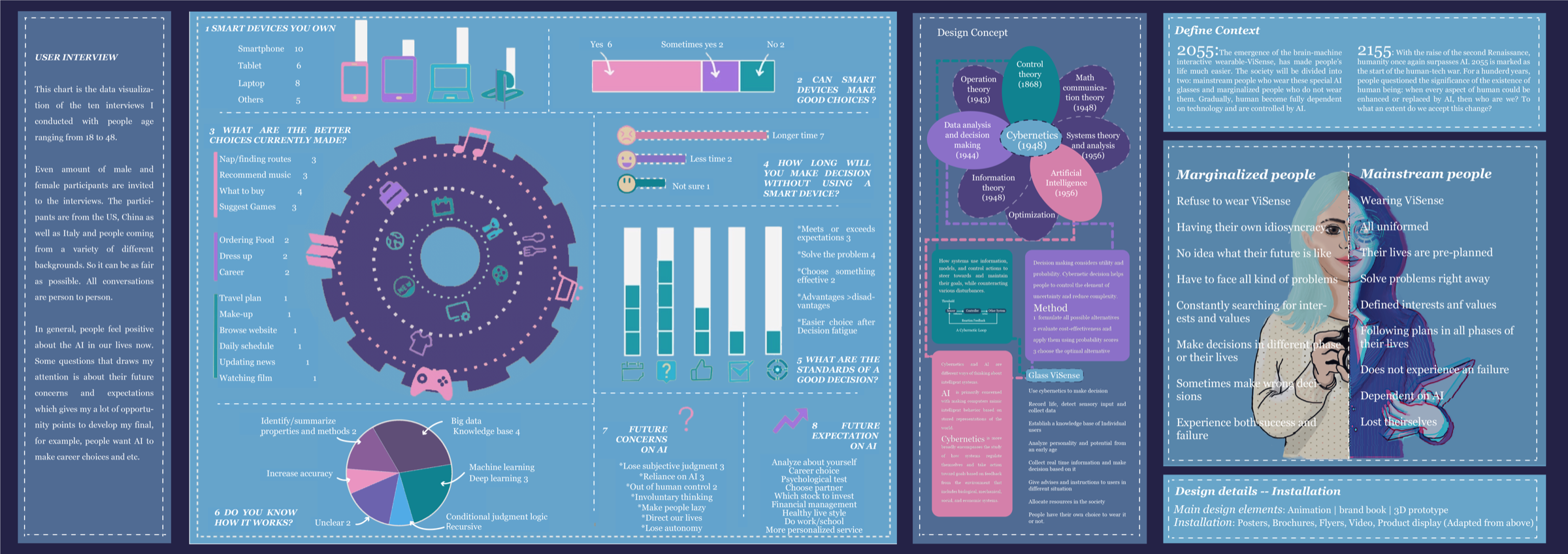
Ten user interviews (ages 18–48, across the US, China, and Italy) grounded the speculation: how people make decisions with smart devices today, what they fear losing to AI — subjective judgment, autonomy — and what they expect from it. From there I defined the 2055 context: a society split between the mainstream who wear ViSense and live pre-planned, failure-free lives, and the marginalized who refuse — and stay human.
Research and the 2055 context — mainstream vs. marginalized.
The Story
An ad that becomes a documentary
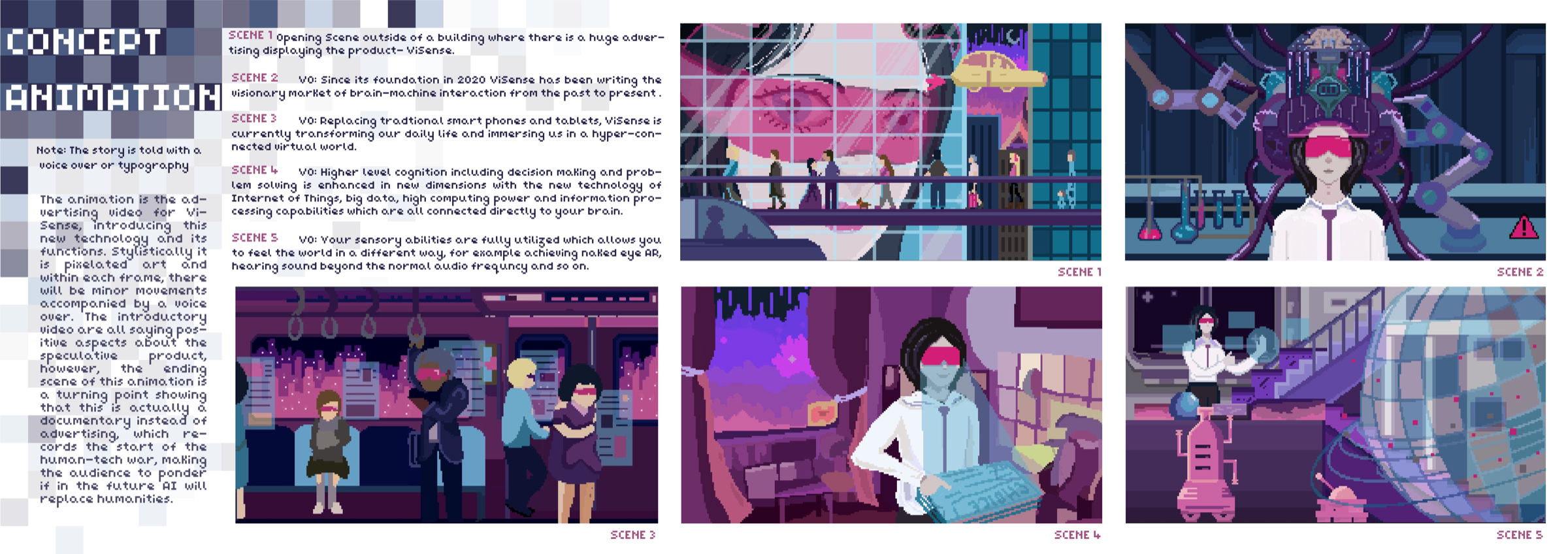
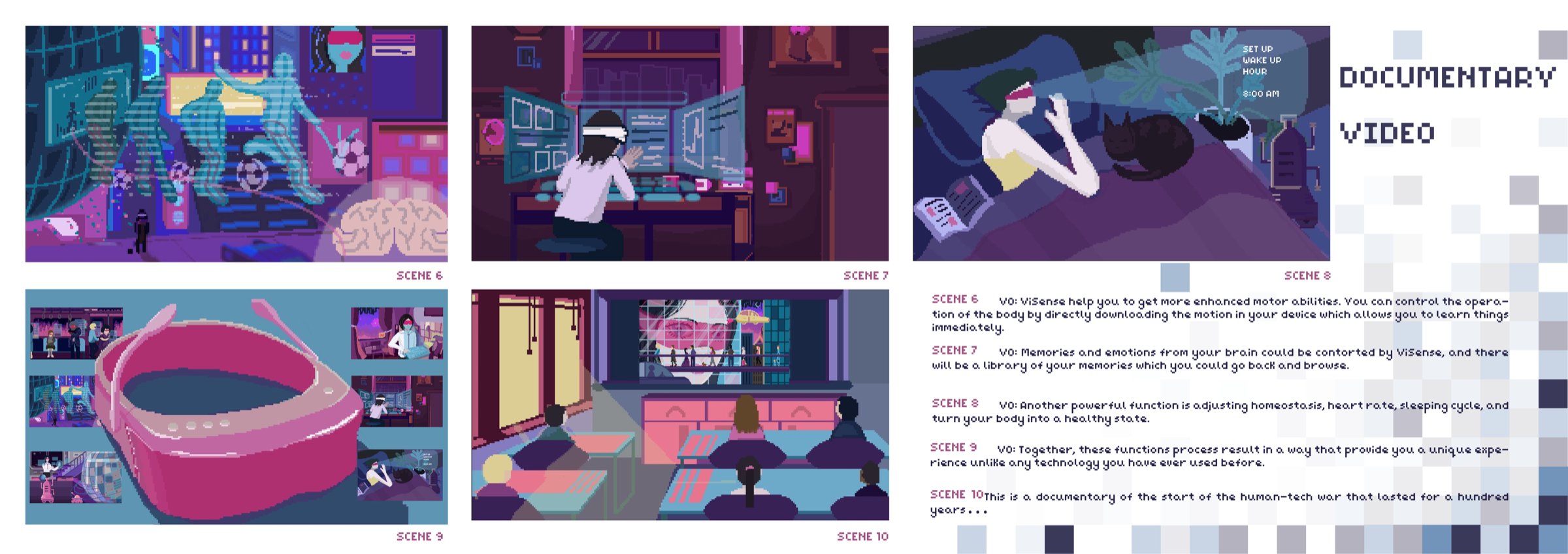
The animation opens as an advertising video for ViSense — five pixel-art scenes selling a hyper-connected life where cognition, senses, and memory are all enhanced. Then the turn: the final scenes reveal it was never an ad, but a documentary recording the start of the human-tech war — asking whether AI will replace humanity.
Scenes 1–5 — the "advertising" half.
Scenes 6–10 — the reveal.
Brandbook
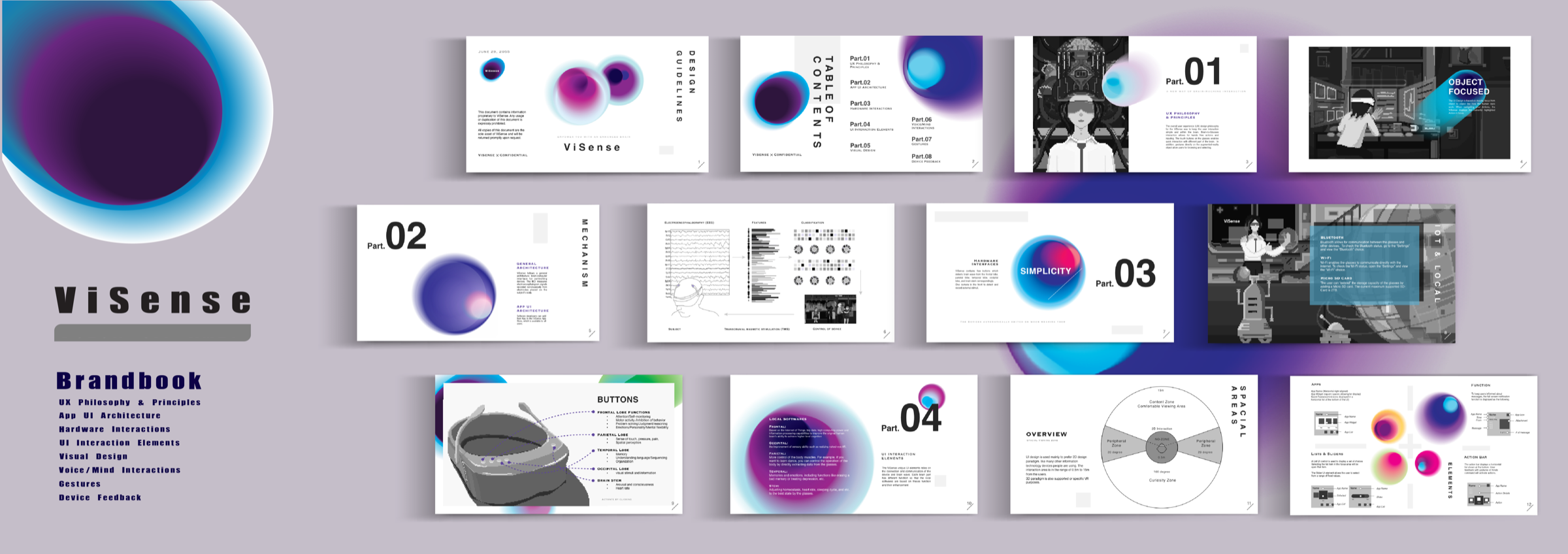
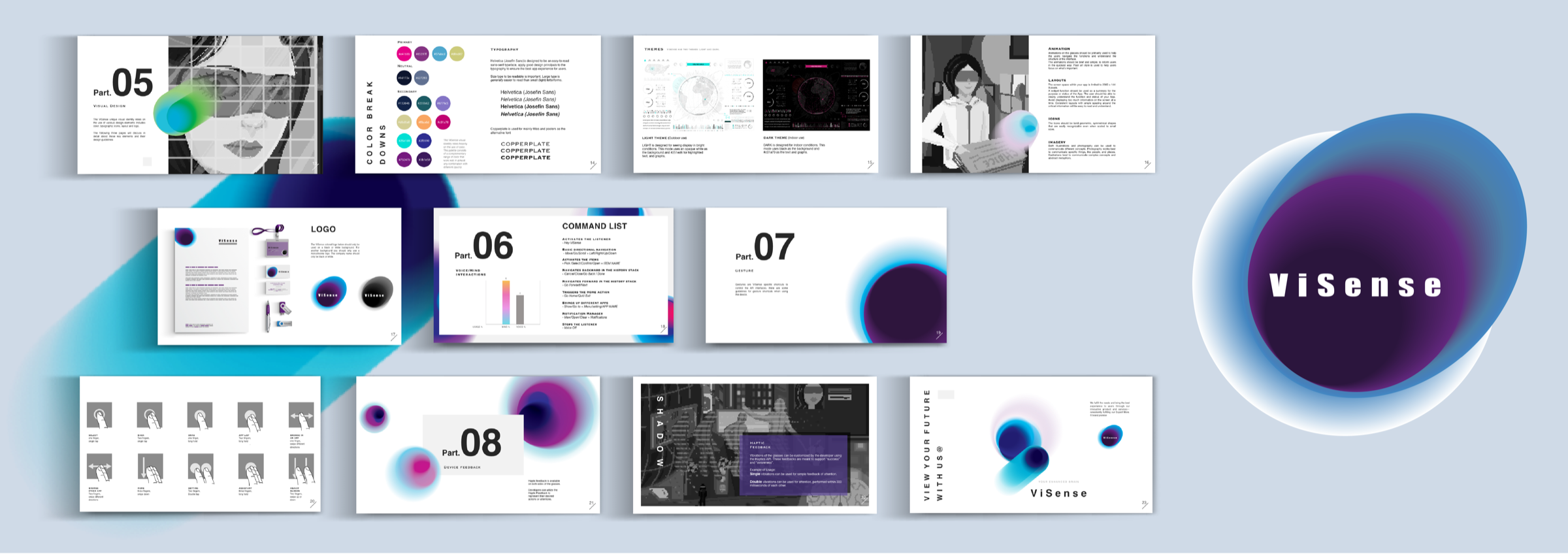
A 23-page design guideline
The ViSense brandbook covers UX philosophy and principles, app UI architecture, hardware interactions, UI elements, visual design, voice/mind interactions, gestures, and device feedback — pairing luminous gradient orbs with pixel art and Helvetica/Copperplate typography.
Prototype & Installation
Off the screen, into the room
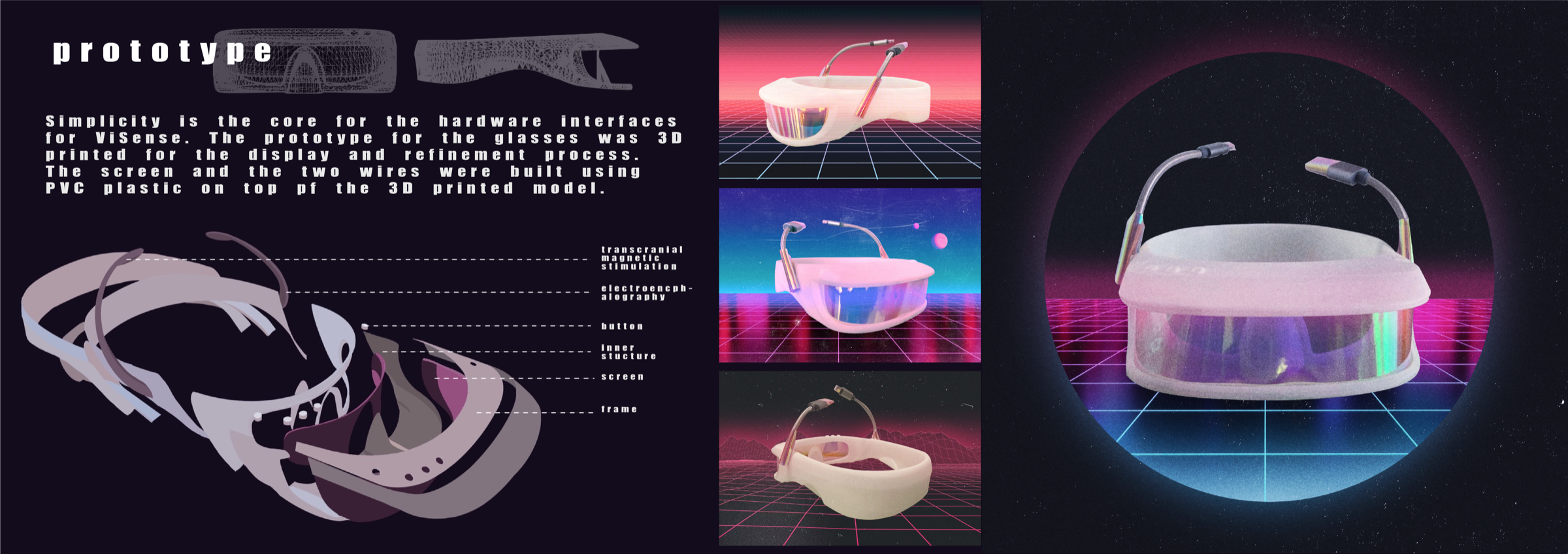
Simplicity is the core of ViSense's hardware. The glasses were 3D-printed for display and refinement, with the screen and wires built in PVC on top of the printed model — TMS and EEG modules, button, inner structure, screen, and frame all mapped in an exploded view.
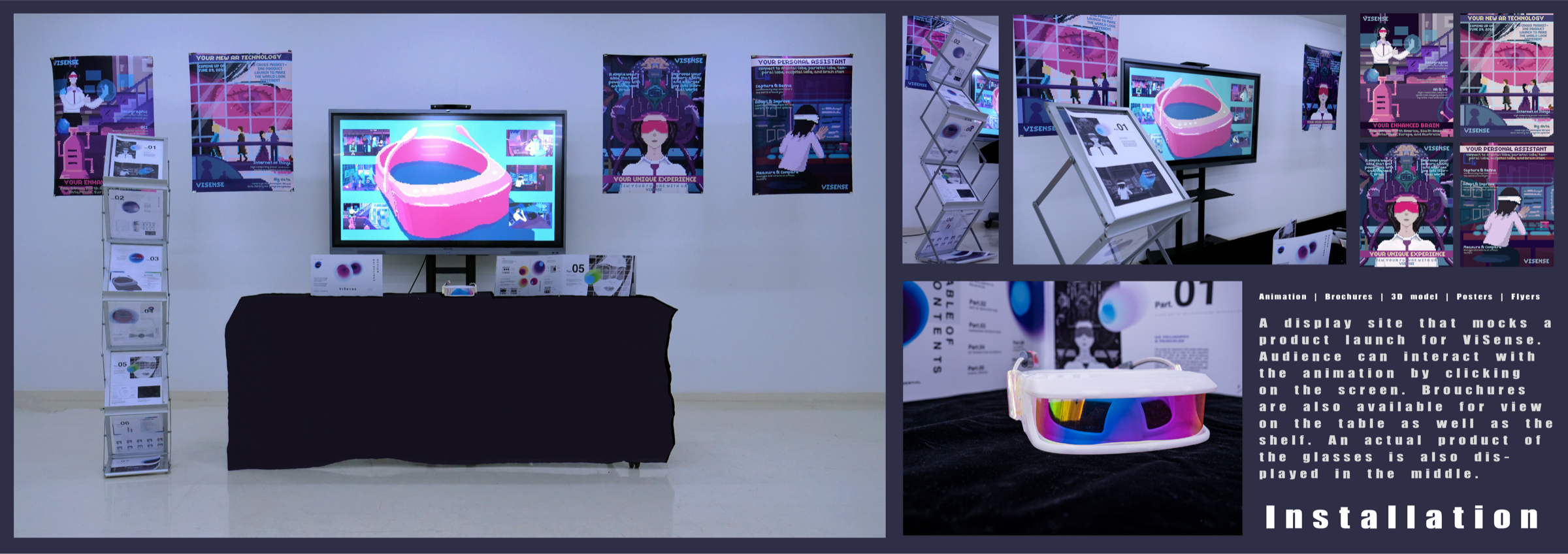
A display site mocked a product launch: an interactive animation on screen, brochures on the table and shelf, posters on the wall, and the actual glasses displayed in the middle.
The installation — animation, brochures, 3D model, posters, flyers.Next project